
Seatech Engineering – proven track record in executing LNG projects
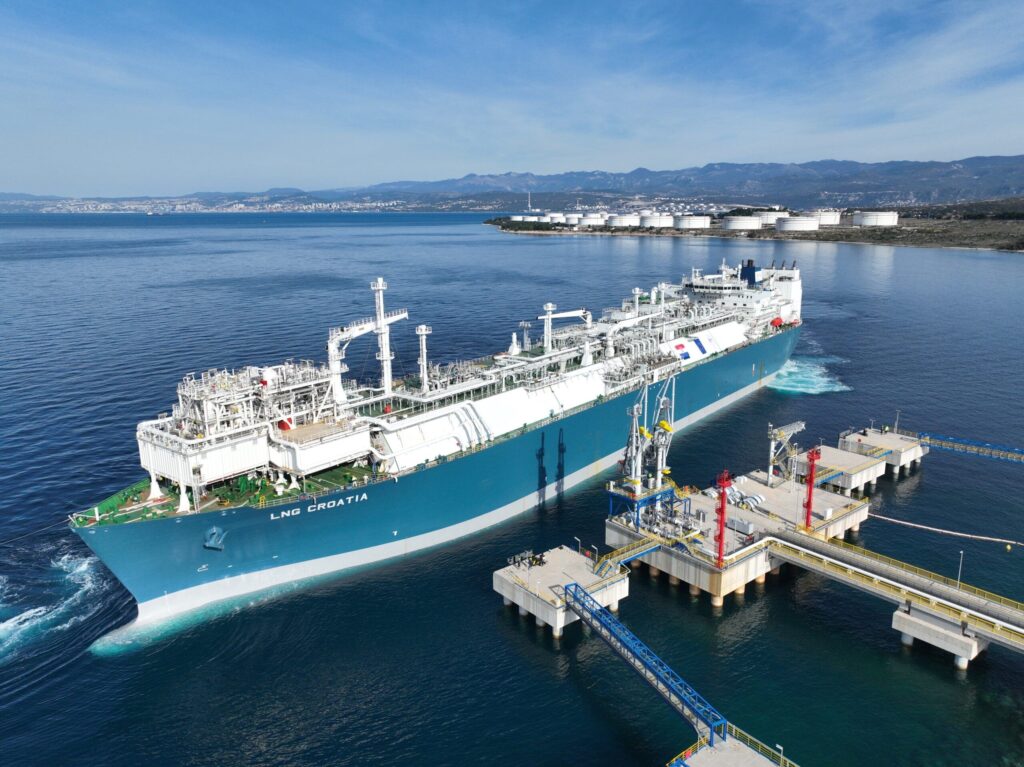
LNG Croatia, modernized FSRU unit, ©LNG Hrvatska
The energy transition in the maritime sector, which aims to reduce emissions and increase the role of renewable energy sources, requires stable and flexible interim solutions. In this context, liquefied natural gas (LNG) is considered as a transitional fuel that enables emissions to be reduced while maintaining the security and continuity of energy supplies. A key role in this process is played by LNG bunkering and delivery vessels, as well as FSRU (Floating Storage and Regasification Unit) and FSU (Floating Storage Unit) ships, which allow for the rapid commissioning of LNG storage and regasification capacities without the need for long-term and capital-intensive onshore investments. Their importance is growing especially in regions where dynamic changes in the energy mix force scalable solutions that can be implemented within short time and adapted to future market needs.
Our design office boasts an extensive portfolio of completed LNG ship designs with diverse parameters and sizes, as well as experience in retrofits, i.e., modernizations and conversions of existing vessels meeting current needs. Due to the constant need of developing LNG vessel fleet, we have been building our competence, experience and relationships with global LNG technology suppliers for many years now, as already mentioned in 2024, indicating the scope of our design expertise in the area of vessels responding to the global demand for LNG.
Long-term cooperation as the foundation for effective LNG ship conversions
Seatech Engineering’s involvement in FSRU and FSU projects is not a one-time activity. It is a result of many years of our cooperation with Wärtsilä Gas Solutions (GS) on the conversion of existing LNG carriers, with five conversion projects already completed and another in the design phase. Common design standards, understanding of LNG technology and experience in working with units in operation allow for the reduction of technical and operational risks, which has a direct impact on the quality and pace of subsequent LNG retrofits.
Year 2025 brought the completion of two joint projects with Gas Solutions, thus providing practical competence confirmation of our office. Their finalization shows that our previously declared capabilities are not just potential, but a real, proven ability to implement projects of strategic importance for the liquefied natural gas market.
First goal – increase FSRU capacity
The first of completed projects, finalized at the end of 2025, involved the modernization of an FSRU unit – LNG Croatia owned by LNG Hrvatska – in order to increase its regasification capacity. The growing demand for LNG import capacity, combined with time and cost restrictions on the construction of new units, makes such upgrades one of the most rational solutions available on the market. In this project, Seatech Engineering was responsible for the comprehensive adaptation of the existing ship structure to enable the installation of a new regasification module and necessary auxiliary equipment. The modernization included both the reinforcement of the bow deck structure and the reconstruction of the hull within the ballast tank area, where a caisson with a seawater pump supplying the regasification system was designed. The key aspect here was the combination of structural design with advanced strength analyses using Finite Element Method (FEM), which confirmed the safety and durability of proposed solutions, and their application had a real impact on the optimization of the entire process, as emphasized in previous publications.
At the same time, we used vessel’s 3D model prepared from scratch in Cadmatic, based on „as built” documentation, which allowed for detection and elimination of potential collisions at the design stage, as well as preparation of construction documentation with a level of detail enabling its direct use as workshop documentation in the shipyard. Combined with Gas Solutions’ modular approach to the design and prefabrication of gas systems, it enabled radical work time reduction in the shipyard. In addition, the design office was involved in developing the layout of electrical switchboard rooms allowing the installation of additional electrical and automatic equipment related to new regasification module, as well as in design work involving modernization of the mooring system, updating and modernizing passive fire protection plan, insulation plan, visibility plan, and also analyzing the equipment index and calculating registered tonnage after the change.
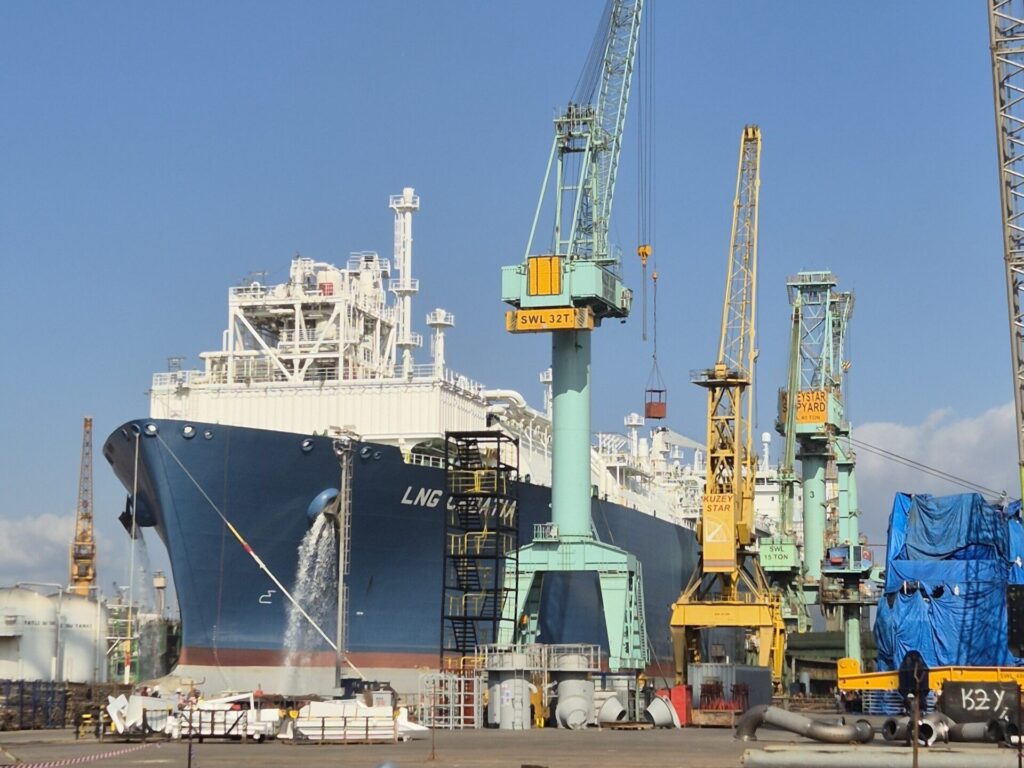
LNG Croatia, FSRU upgraded to increase regasification capacity, ©LNG Hrvatska
Comprehensive intact and damaged stability analyses performed by our engineers using NAPA software, in accordance with the requirements of the IGC Code (International Code for the Construction and Equipment of Ships Carrying Liquefied Gases in Bulk), were also an integral part of the project. This process was carried out in two stages – first based on calculated additional weights of installed systems, and then, after the conversion, based on the results of the inclination test carried out at the shipyard. We were also responsible for developing test procedure and final report, and ultimately prepared design documentation was approved by the classificationsociety. This approach confirms our ability to take responsibility for the entire design process, right up to the final classification approval. The final result was measurable from a business point of view. The entire process of modernizing the vessel at the shipyard took only seven weeks, minimizing the period of FSRU downtime. For operators, this means that a well-prepared retrofit project can significantly reduce lost revenue and operational risks.
Conversion of LNG carrier to FSU
A little earlier, in mid-2025, the second key project of upgrading LNG carrier to FSU function was successfully completed, confirming high effectiveness of our cooperation with Gas Solutions, and once again reduced the conversion time and minimized period of unit’s decommissioning. As part of the project, GS carried out a comprehensive modernization of LNG loading system, including installation of LNG liquefaction modules (Reliquefication Units) and BOG (Boil-off Gas) compressors, which were installed on newly designed open decks by Seatech Engineering. These structures, together with necessary reinforcements to existing decks, were designed to minimize the interference with the hull in the area of the prismatic LNG tanks. All classification and working documentation was based on 3D Cadmatic model built from scratch and was successfully approved by the classification society.
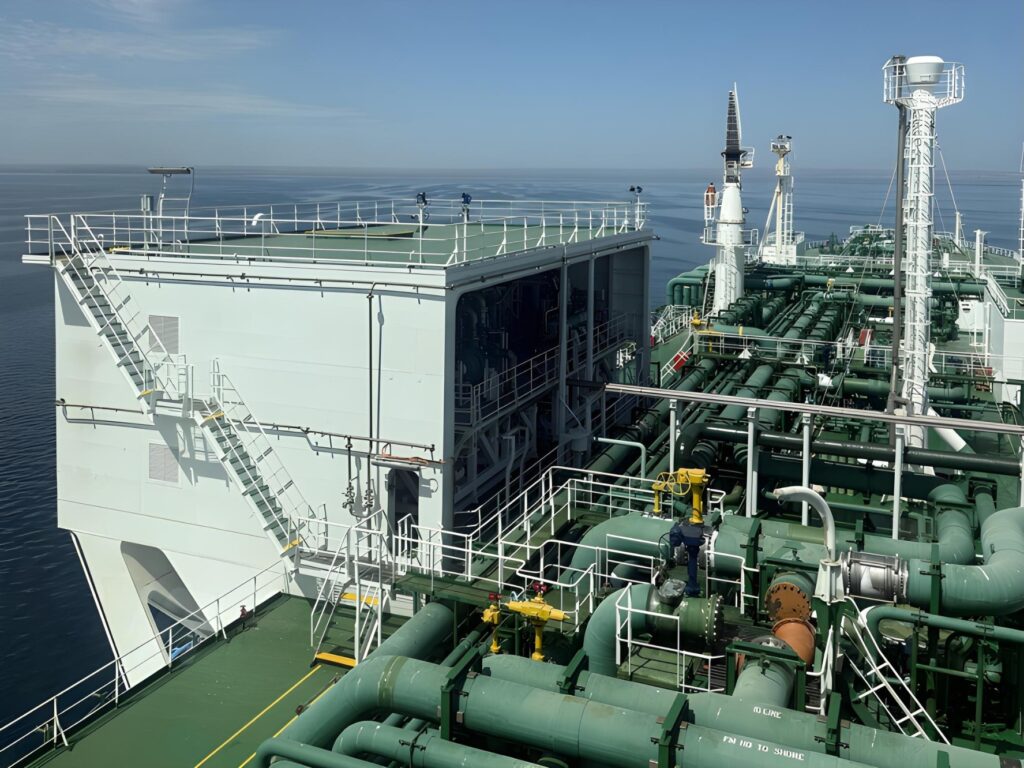
LNG Carrier open deckhouse designed for newly installed reliquefication system, ©Wärtsilä Gas Solutions
Decks and equipment were verified by FEM strength calculations and comprehensive natural vibration analysis, performed entirely by our engineers, the validity of which is confirmed by the absence of reports of operational problems related to vibrations. An important element of the process was also a joint design of a containerized switchboard and automation systems room, enabling quick connection of new installations in „plug and play” formula, including, among others, the design of the container structure, strength and vibration analyses, ventilation, air conditioning and water cooling systems. At the same time, as in the first project, we were responsible for updating and approving a number of ship documents, including passive fire protection plan, insulation plan, visibility plan, equipment index analysis, registered tonnage calculations and tank plan modifications. The project was completed with intact and damaged stability calculations based on additional masses analysis (approx. 700 tons) and inclination tests after the conversion, with both sets of calculations approved by the classification society.
Against the backdrop of growing challenges of energy transition in the maritime sector, the projects described above prove that LNG conversions can now be not only technically safe, but also commercially viable and implemented within very short timeframes. Cases of increasing vessel capacity and adapting ships to new functions show that a well – prepared retrofit – based on reliable analyses, a precise 3D model and close coordination between partners – allows for an effective response to dynamically changing market needs without the need to invest in new vessels.
The key factor in the success of both projects was the synergy of expertise of Gas Solutions and Seatech Engineering. The combination of modular, proven LNG technologies and systems from GS with comprehensive design, strength and stability analyses and the experience of out Team has created an effective model of cooperation that significantly reduces technical risks, shortens the time of ship’s stay at the shipyard and increases the predictability of the entire investment process. From the perspective of the LNG market, these projects confirm that we not only have the essential competencies, but also practically verified ability to carry out complex LNG vessel projects from concept to classification approval. Our long – standing, consistently developed cooperation with Gas Solutions translates into repeatable quality, scalability of solutions and readiness to carry out further conversions, which in the coming years will be one of the key tools supporting a safe energy transition in the maritime sector.