Autor: seatech87654_admin

LNG

Seatech Engineering – proven track record in executing LNG projects

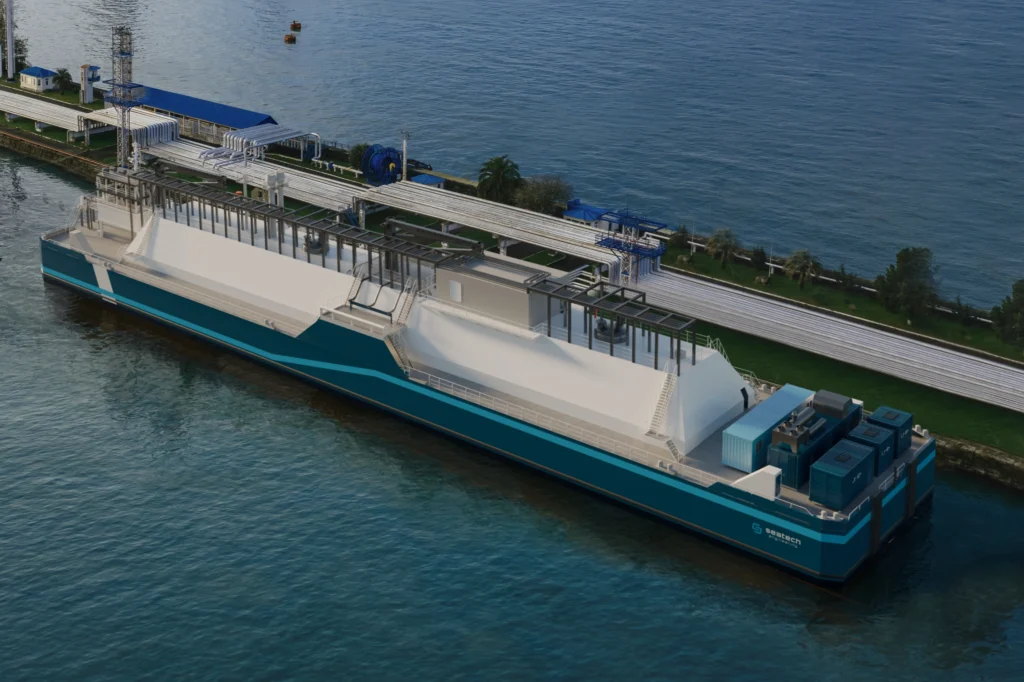
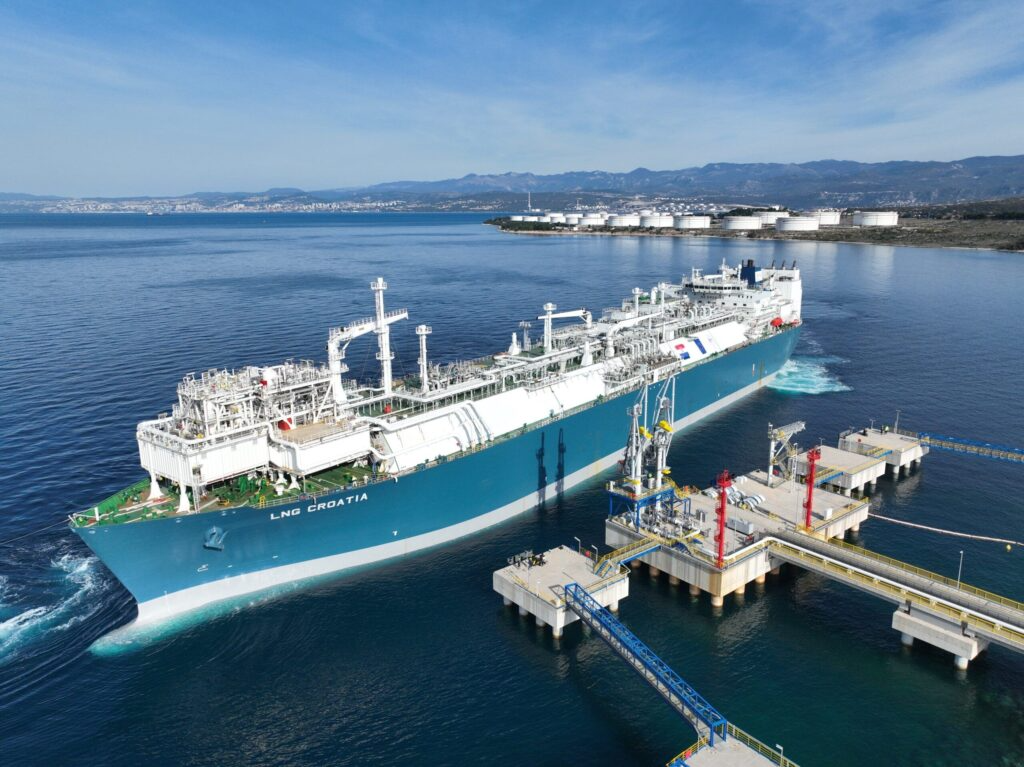
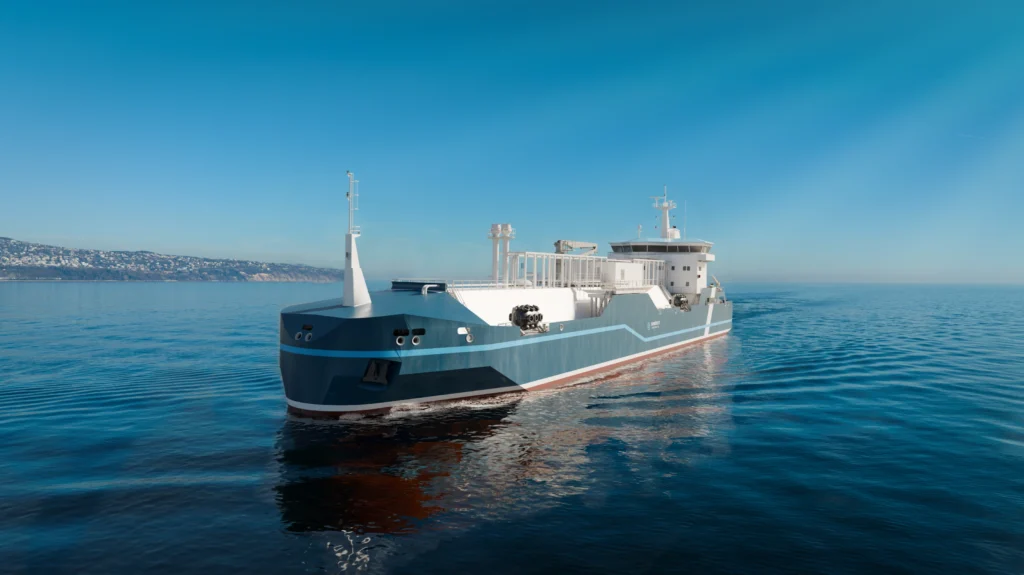
The energy transition in the maritime sector, which aims to reduce emissions and increase the role of renewable energy sources, requires stable and flexible interim solutions. In this context, liquefied natural gas (LNG) is considered as a transitional fuel that enables emissions to be reduced while maintaining the security and continuity of energy supplies. A key role in this process is played by LNG bunkering and delivery vessels, as well as FSRU (Floating Storage and Regasification Unit) and FSU (Floating Storage Unit) ships, which allow for the rapid commissioning of LNG storage and regasification capacities without the need for long-term and capital-intensive onshore investments. Their importance is growing especially in regions where dynamic changes in the energy mix force scalable solutions that can be implemented within short time and adapted to future market needs.
Knowledge exchange

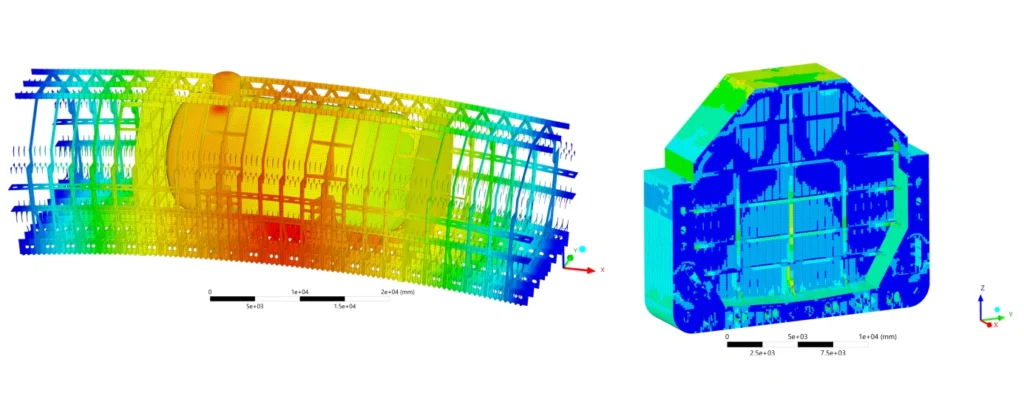
The use of FEM analyses as a support tool for optimizing ship design process, and thus the construction and ultimate operation

The key feature of the ships built today is the safety of their construction. In addition to protecting human life, the capability of operating in difficult conditions at sea and protecting natural environment is crucial. Furthermore, minimizing the risk of accidents and the costs of potential repairs, and thus high compensation payments, is also one of the key objectives of the shipbuilding process. The whole project must also be cost-effective and comply with agreed implementation schedules. The answer to these challenges is to optimize ship design in terms of quantity and weight of construction materials used. To this end, design offices use dedicated, specialized software to increase both precision and efficiency of strength calculations, as well as to comply with customer requirements and classification regulations and ensure the safety of the structure, while taking into account also the final cost of building the vessel.

LNG

LNG Bunkering Vessel for Polish market – a strategic need in the era of Net-Zero shipping and an opportunity for growth of Polish maritime companies

Climate changes and the resulting need for energy transition are now undeniable facts. In the light of GHG strategy for maritime transport adopted in 2023 (2023 IMO Strategy on Reduction of GHG Emissions from Ships), decarbonization targets have been adopted for the first time in the history of international maritime sector. 
The priority is to reduce greenhouse gas emissions by at least 20% by 2030, then by 70% till 2040, until net-zero is achieved around 20501.

Knowledge exchange

Ship design – challenges in contracting process (part II)

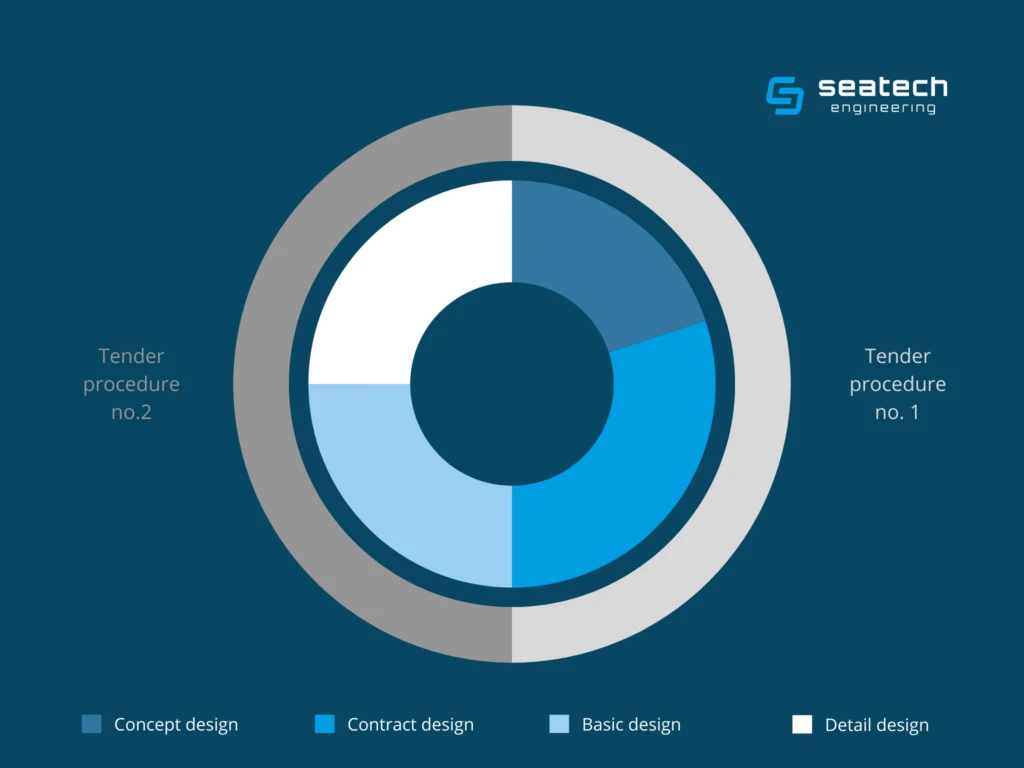
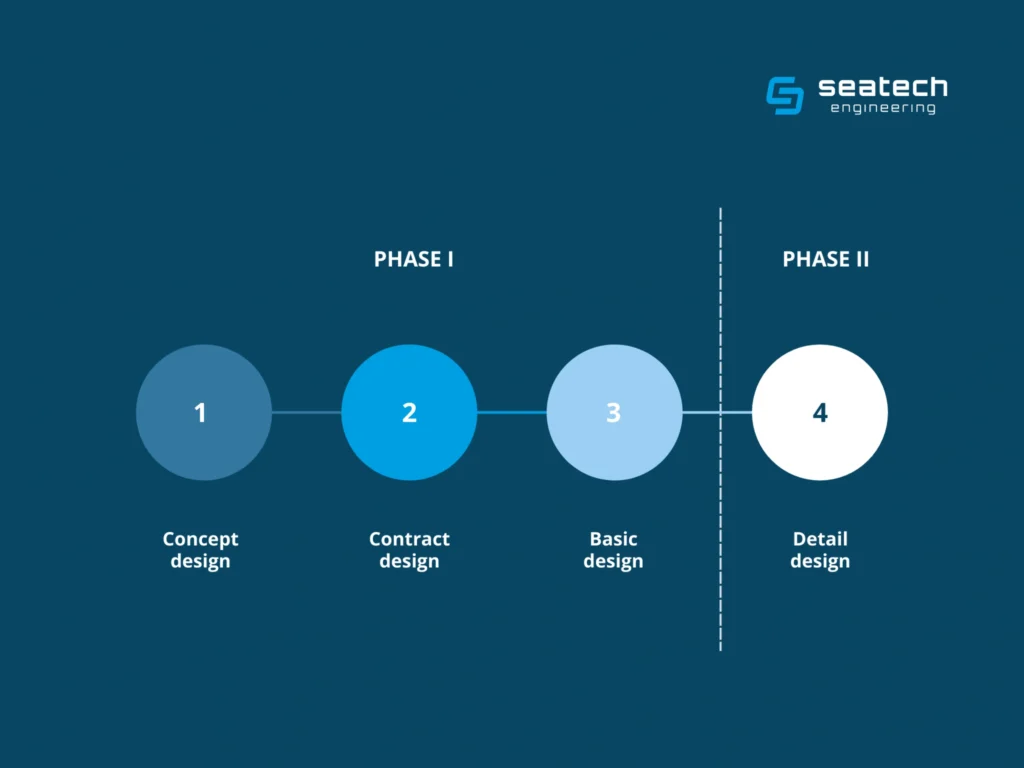
Diversified practices in the area of contracting ship design services affect the efficiency of project implementation, as discussed in the first part of the article. As we’ve recommended, the most beneficial solution is to divide contracting into two parts – first tender including concept and contract design, and second procedure covering basic design and workshop documentation of the ship. Following article will introduce the complexity of the design process and benefits of implementing abovementioned division of contracting for all interested parties, i.e. the buyer, the design office and the shipyard.

Knowledge exchange

Ship design – challenges in contracting process (part I)

Ship design is a complex process, requiring meticulous planning, risk management and the ability to make compromises between the buyer/owner, the design office and the shipyard/builder. Design services contracting process is based mostly on tendering procedures, but the practices vary both in terms of the nature of the owner (public or commercial) and the location (domestic projects or foreign tenders). The following article treats the differences in contracting ship design, affecting further stages of the project, based on our 20 years of experience in providing services for ship owners in different parts of the globe.

FSRU, LNG

The need for alternative fuels is a well-known fact. Seatech Engineering with a response to the growing need of building a fleet of LNG units.

In the dynamic world of marine engineering and the growing importance of green energy, the role of ship design offices cannot be overestimated. They serve to materialize the shipowner’s requirements and seek efficient and cost-effective solutions that meet the needs of the changing market, comply with the growing environmental criteria and support the sustainable development of maritime transport.

Company life

Seatech Engineering is celebrating 20th anniversary and has very ambitious plans for upcoming years!

The 20-year history of Seatech office, which designs specialized vessels for the shipbuilding industry, is behind us. It was on October 15, 2003, exactly 20 years ago, when Gerard Jasiński, then acting as the Director of Centromor Ship Office, together with Pascal Piriou, representing French shipyard Chantiers Piriou, founded a company called Seatech Engineering Ltd.

Send us Your resume

SE-618 Shallow Draught LNG Feeder

SE-618

H10 Navy Tug

H10

SE-413 Patrol Boat

SE-413

SE-410 Patrol Boat

SE-410

SE-408 Offshore Patrol Vessel

SE-408

SE-407 Fast Patrol Vessel

SE-407

SE-406 Offshore Patrol Vessel

SE-406

SE-907 8 - 14 MWe Floating Power Unit

SE-907

SE-621 PCU Ro-Ro Car Carrier

SE-621

SE-615 Multifuel Bunkering Platform

SE-615

Message to Mariusz Czajkowski

Mariusz Czajkowski

SE-608 LNG Bunkering Vessel

SE-608

SE-607 LNG Floating Storage and Bunkering Unit

SE-607

SE-602 LNG Bunkering Vessel

SE-602

SE-601 LNG Bunkering Vessel

SE-601

SE-224 Crew Transfer Vessel

SE-224

SE-223 Crew Transfer Vessel

SE-223

SE-219 Crew Transfer Vessel

SE-219

SE-202 Wind Farm Service Vessel

SE-202

"USTAW TYTUŁ"

Message to Adam Ślipy

Adam Ślipy

Message to Agata Maderska

Agata Maderska

SE-308 Inland Passenger Vessel

SE-308

SE-208 SAR Multipurpose Vessel

SE-208

SE-305 Waterbus

SE-305

SE-304 Double - Ended Ferry

SE-304

SE-301 Shallow Water Passenger Vessel

SE-301

SE-806 Research Vessel

SE-806

SE-804 Research Vessel

SE-804

SE-217 Oil Recovery Vessel

SE-217

SE-211 SAR Multipurpose Vessel

SE-211

SE-209 Water Injection Dredger

SE-209

SE-111 SAR Multipurpose Rescue Vessel

SE-111

Message to Joanna Kandler – Łopacińska

Joanna Kandler – Łopacińska

SE-107 Multipurpose Vessel

SE-107

B870 Research Vessel (Oceanograf)

B870

SE-517 Freezing Trawler (Dunga Jákup)

SE-517

SE-514 5800 m3 Life Fish Carrier

SE-514

SE-807 Workboat

SE-807

SE-230 Landing Craft

SE-230

SE-216 Service Boat

SE-216

SE-114 Buoy Laying Vessel

SE-114

SE-110 Multipurpose Boat

SE-110

SE-108 Service Operation Vessel

SE-108